
Tools, Not Friends
America, Israel, and the Lessons of Versailles

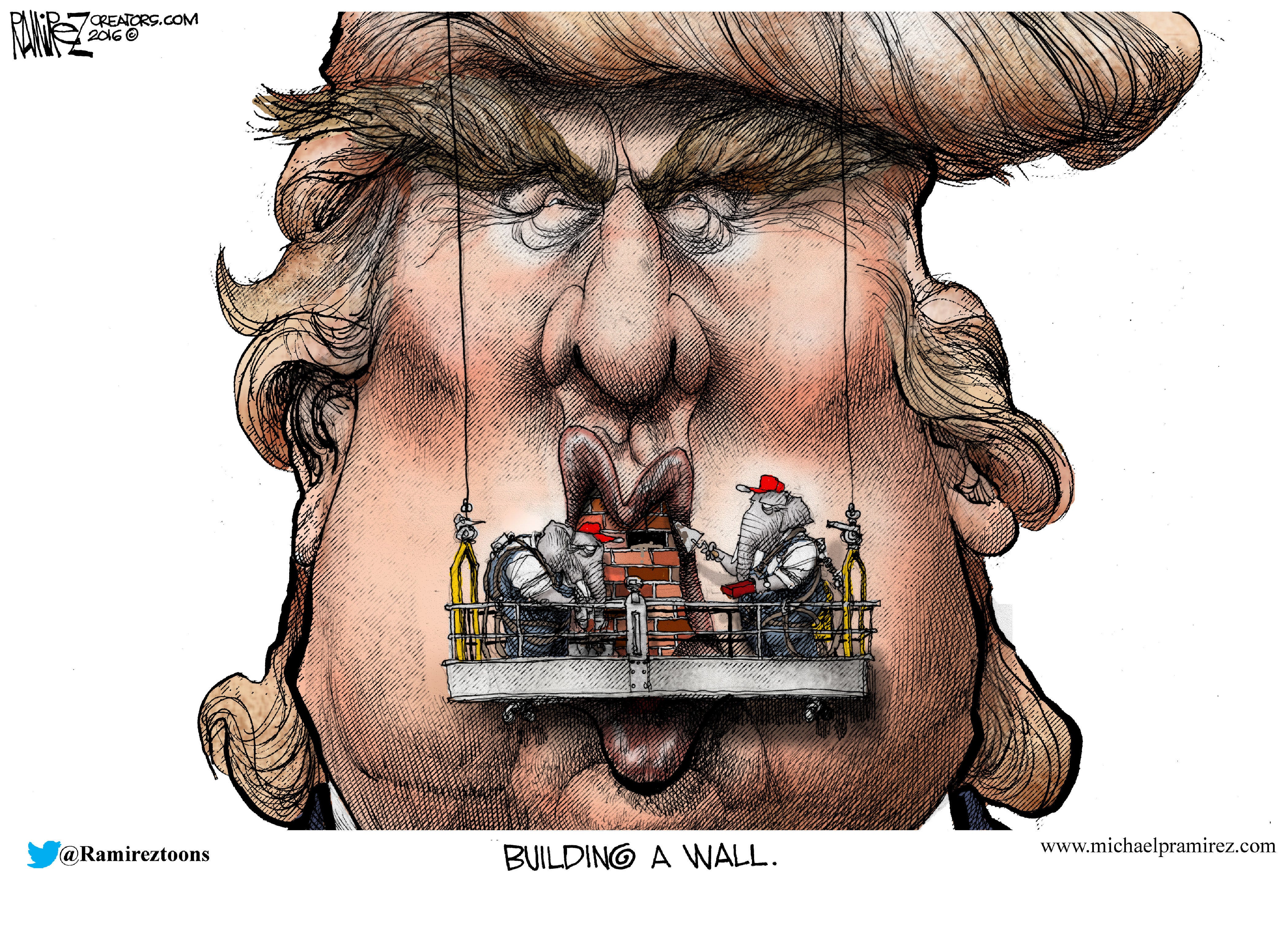
On the afternoon of August 6, in the Oval Office, Donald Trump was asked about the request his administration had just sent to Congress for additional weapons funding. “We have unlimited, virtual unlimited supply,” he answered, before conceding that certain munitions were “tighter” and that the less advanced ones “may not be as elite.” The admission sat inside the reassurance.
According to inventory figures reported by CNN on the basis of two sources familiar with the Pentagon’s latest stockpile review, the United States has expended close to four fifths of its THAAD interceptors and roughly half of its most modern Patriots since the war against Iran opened on February 28; the Center for Strategic and International Studies had put the pre-war baseline at some 2,200 Patriots of the two newest variants and 452 THAAD missiles. Five months of war have consumed what decades of procurement accumulated. The bravado has an arithmetic, and the arithmetic is public.
It is in this atmosphere of depletion that a convenient fiction circulates in Washington and in parts of the American commentariat: the idea that the United States went to war against Iran reluctantly, dragged into the conflict by Israel’s demands, and that Israel should now express gratitude for a sacrifice supposedly imposed on an innocent superpower. You do not move carrier groups, long-range strike assets and a dense logistics chain into a theatre as a favour. The war was a choice made in Washington, under an American president, according to an American calculation — however incompetent — that force would serve American interests. The Pentagon’s Defense Casualty Analysis System, as cited by CNN on August 4, recorded eighteen American soldiers killed and six hundred and eighty-seven wounded since February 28; that a group of Democratic senators was still pressing the secretary of defense in late July to reconcile inconsistencies in that very ledger says something about how carefully the costs of this war are being counted. Whatever the final figures, these soldiers died under American orders, in a war launched by an American commander-in-chief. Responsibility sits where the orders were signed.
The incompetence matters, because a war can be both chosen and mismanaged. The administration’s handling of signalling and escalation suggests less a reluctant protector bullied into action by an ungrateful client than a government alternating between maximalist rhetoric and improvisation, with little discipline over how threats were issued, sequenced or cashed out. Over six months the president has repeatedly announced devastating blows, then suspended them as talks resumed. On the first weekend of August he called off strikes he had himself described as the largest yet prepared, explaining that Iran and “other Middle Eastern countries” had asked him to hold off; CNN reported that the Saudi crown prince had raised his concerns by telephone hours earlier. A superpower that publicises its intention to strike, then publicises the allied phone call that stopped it, is not protecting a client. It is teaching every observer in the region how to price its threats.
Nor is it historically accurate to claim, as some American politicians now do, that “America created Israel” and therefore stands as its patron in perpetuity. The archival record is inconvenient for the paternity myth. Harry Truman recognised the new state minutes after its proclamation in May 1948 and simultaneously maintained the arms embargo that denied it weapons; the rifles and dismantled Messerschmitts of the independence war came overwhelmingly from Czechoslovakia, with Moscow’s consent. Walter Russell Mead devoted much of The Arc of a Covenant (2022) to dismantling precisely this legend, showing that American support for Israel followed American interests and American domestic culture rather than any act of creation, and that the image of Israel as a Washington artefact is a retrospective construction serving whoever invokes it. The State of Israel was proclaimed by its own leadership and defended by its own army. America did not conjure it into being; America integrated it, later and selectively, into an existing strategy.
The scholarship on that integration is older than the current quarrel. A.F.K. Organski, in The $36 Billion Bargain (1990), examined the aid statistics and found that massive American assistance did not begin in the 1950s and 1960s, when Israel was weak and received almost nothing; it began after 1970, once Israel’s mobilisation during the Jordanian crisis had demonstrated its value against Soviet clients. Aid tracked usefulness. It did not track only usefulness, and the model should be allowed its exceptions: in September 2016, Barack Obama signed the largest military aid memorandum in the history of the relationship, thirty-eight billion dollars over ten years, months after losing to Netanyahu the bitterest fight of his presidency over the Iran deal — a moment when domestic politics, religious culture and historical imagination carried what strategic alignment alone would not have. What strategic value explains is not the whole of the relationship. It explains the relationship’s resilience: why, at each moment when affinity had to be converted into weapons and into risk, the conversion was made. Camille Mansour reached a compatible conclusion in Beyond Alliance (1994): there is no mutual defence treaty and no legal obligation, only a continuously renegotiated American perception of Israel’s strategic worth. The language of friendship obscures what these authors documented decades ago: Israel is kept strong because it is useful, and it is constrained because that usefulness is judged against wider American interests, never in deference to Israeli preferences.
The notion that Israel’s “only real ally” is the diaspora is, in this light, both too narrow and too sentimental. Diasporic networks matter, for finance, for political support, for cultural ballast, but they are not aircraft carriers or missile-defence batteries. Israel’s survival has rested on its own capacities and on the way those capacities fit the calculations of states. When Americans insist that Israel should say thank you and content itself with diaspora affection, they are converting an instrumental bargain into a moral debt, and obscuring the fact that Washington, too, has been using Israel.
A durable reading of U.S. Middle East policy is that Israel has never been treated as a sentimental ally but as a strategically valuable regional asset whose power must be supported and contained at the same time. Israel is useful to successive administrations because it is militarily capable and politically resilient, able to generate deterrence in a region where American influence is contested. Yet that same strength poses a standing dilemma for Washington: Israel must be armed and protected enough to remain credible, and managed carefully enough that Israeli action does not trigger a wider war, rupture relations with Arab partners, threaten energy flows, or drag the United States into escalation on terms it did not choose.
The relationship is therefore less a story of uncomplicated solidarity than of strategic management. Domestic politics, shared strategic culture, defence-industrial ties and genuine affinity all matter, but the core is instrumental: Washington has relied on Israel for deterrence, intelligence and technological cooperation while resisting the idea that Israeli priorities should become the organising principle of American policy. Officials have wanted Israel strong but not unconstrained. Israel has functioned as a forward-deployed deterrent, as a regional military counterweight, and as a laboratory whose solutions could be folded into broader American strategy.
The Carter era codified this architecture. Carter pursued the Camp David accords and Egyptian-Israeli peace while announcing, in January 1980, that any attempt by an outside power to gain control of the Persian Gulf would be regarded as an assault on the vital interests of the United States and repelled by any means necessary, including military force. The result was a dual track: diplomatic stabilisation of the Arab-Israeli arena and a hardened security perimeter around the Gulf’s energy arteries. Over the decades that followed, preventing any single rival or coalition from dominating the region became the organising aim of American strategy, and Israel — whose very place in the Gulf’s command arrangements Washington at first debated — became one of the main instruments through which the prevention was enforced.
Since the end of the Cold War, the instrumental logic has been reinforced by the broader trajectory of American policy. The Iraq Liberation Act of 1998 made regime change in Baghdad an explicit objective, and the 2003 invasion attempted to demonstrate that hostile regimes could be removed and replaced at acceptable cost; the result weakened American standing and strengthened Iran. Obama’s intervention in Libya and the covert programme in Syria repeated the pattern on a smaller scale, toppling or destabilising without producing new orders. Trump’s first-term maximum-pressure campaign extended the same repertoire of coercion while revealing the limits of the American appetite for prolonged confrontation.
Throughout, Israel’s role was less that of a ward than of a tool — though a tool, here, does not mean a proxy. The strike on Osirak in 1981 is the purest illustration: Washington condemned it at the time, voting for Security Council Resolution 487 and suspending F-16 deliveries, then spent the following decades collecting the strategic benefit of an Iraqi bomb that never came. A proxy executes instructions; this instrument acts on its own information and its own timetable, sometimes against the stated preferences of the power that arms it, which then inherits results it had publicly deplored. The destruction of the al-Kibar reactor in 2007 and the long campaign against Iranian convoys and networks in Syria repeated the pattern with less friction, giving Washington outcomes without formal implication. The more costly and discredited direct regime-change efforts became, the more attractive it was to rely on an ally capable of acting, and of absorbing blowback, within its own security theatre. Israel became the hard edge of a policy that still aimed to neutralise threats but no longer wished to pay openly for every blow.
Iran’s post-revolutionary trajectory crystallised this logic. The Islamic Republic was a hostile, structurally important actor whose geography, revolutionary ideology, energy position and networks in Iraq, Syria, Lebanon and Yemen had to be factored into every American calculation. Iran became both a threat to contain and the strategic variable around which deployments, sanctions and regional coordination were organised. Israel’s role intensified accordingly: it became the regional actor most able, and most willing, to check Iranian reach, holding a line so that American forces would not have to act first in every crisis. The war that began on February 28, 2026, with the killing of Ali Khamenei, did not suspend that division of labour. It stress-tested it.
Lebanon and Syria sit at the hinge of the arrangement, and the past five months have shown why. On March 2, in response to Khamenei’s death, Hezbollah resumed fire on Israel after more than a year of degraded truce; Israel answered with a sustained air campaign and, from March 16, a ground operation in southern Lebanon that grew to five divisions, with battles at Khiam and Bint Jbeil. The Lebanese state’s own disarmament roadmap, the Dir al-Watan (”Nation Shield”) plan adopted in August 2025, had by the army’s own communiqués extended state control south of the Litani and begun dismantling tunnels and munitions caches; the speed with which the front reopened the day Hezbollah’s patron lost its leader can be read as the measure of what remained. As of August 6, Israeli-Lebanese talks were being described as productive even as strikes continued in the south. Israel insists it will not stop before Hezbollah’s military capacity is broken, and the insistence is addressed to Washington as much as to Beirut.
Israel’s persistent objective has been to prevent Syria from becoming a stable platform for Iranian entrenchment and for transfers of advanced capabilities to Hezbollah. This is a matter of denying Iran the ability to fuse Lebanon and Syria into a single theatre from which Israel can be deterred and the United States leverage-checked. The northern front is where Israel’s value to Washington is either preserved or eroded: dominated by Iran-backed forces, it would turn Israel from asset into liability; neutralised or degraded, it keeps Israel in its familiar role as America’s most capable forward deterrent.
Turkey complicates the picture without displacing it. Since the fall of Bashar al-Assad in December 2024, Ankara has established itself as the dominant external patron of Ahmed al-Sharaa’s government: negotiating a defence pact with Damascus, training the new Syrian army, and initially planning three military bases in central Syria. Israeli aircraft struck the airfields Turkish teams had surveyed, and Ankara shelved the deployment. Through Azerbaijani mediation the two states then agreed a deconfliction mechanism that Turkish officials describe as strictly technical, signalling neither normalisation nor convergence; Turkey’s foreign ministry has meanwhile called Israel the greatest threat to regional security. On July 19, al-Sharaa consolidated the Syrian security apparatus under his interior minister, Anas Khattab, a centralisation Ankara reads as stabilisation and Israel reads as a threat under construction. Turkey is not an outright military adversary of Israel. It is no longer a predictable Western partner either.
The collision risk concentrates in Syrian airspace. Israel wants operational freedom to strike Iranian-linked infrastructure and weapons flows to Hezbollah; Turkey wants to entrench its security zone, limit Kurdish autonomy and shape the post-war order. These agendas can collide without open war, and both sides know it, which is why the hotline exists. Damascus, for its part, has begun to read the balance: on July 26, al-Sharaa told Al Jazeera that Syria was seeking a security agreement with Israel that could pave the way toward a broader peace without renouncing its claim to the Golan. As long as Hezbollah’s forces and supply lines are anchored in both Lebanon and Syria, any Israeli attempt to manage the northern front must treat the two as a single operational space, with Turkish assets now woven through it.
Netanyahu’s strategy has long proceeded from the assumption that Israel can rely indefinitely on American capabilities, never on American will, and that Washington’s view of Israel as an instrument rather than an end can cut both ways. If Israel is valuable because it deters common enemies and stabilises energy and trade routes, then its value is conditional: it must continue to perform that function even as the American appetite to underwrite the regional order diminishes. It is no accident that under Netanyahu Israel pushed for the Abraham Accords, invested in security coordination with Gulf states that aligns radar, missile defence and airspace without formal alliance structures, and deepened its triangle with Greece and Cyprus. In June 2026 that alignment acquired an institutional face with the launch of a U.S.-Greece-Cyprus-Israel Eastern Mediterranean Energy Center, chartered for energy security and infrastructure resilience — an architecture whose geography, whatever its founding documents say, also reduces dependence on routes that Turkey controls or can influence. The war against Hezbollah belongs to the same logic: breaking the most immediate Iranian lever on the northern front proves, to Washington and to everyone watching Washington, that Israel can still deliver deterrent outcomes without waiting for American intervention.
The document known officially as the Islamabad Memorandum was signed on June 17 in a scene that condensed the whole affair. Trump signed a hard copy at a dinner at the Palace of Versailles, during the G7 summit, at the table of Emmanuel Macron; Masoud Pezeshkian signed remotely in Tehran; Shehbaz Sharif, the Pakistani mediator, announced entry into force; Mojtaba Khamenei endorsed the text in writing, misgivings included. Fourteen points, some eight hundred words. The obligations were not one-sided, and the honest way to read them is through their asymmetry of nature and calendar rather than through their count. Iran’s immediate undertakings — holding fire, letting shipping pass toll-free for sixty days — were acts of abstention, reversible by a single decision in Tehran. The American undertakings — lifting a blockade in force, lifting sanctions, unfreezing assets — surrendered instruments already held, each costly to reconstitute. And the Iranian commitments that would actually alter the balance, on enrichment, on missiles, on the strait’s future administration, were deferred into a sixty-day window of process. On the morning the blockade lifted, the President addressed the merchant fleets of the world with a flourish, telling the ships of the world to start their engines and let the oil flow, presenting the reopening as an American decision. The guarantor paid up front; the challenger promised to consider paying later.
The sixty days did not hold. Hostilities resumed in mid-July, and Javad Heiran-Nia, who directs the Persian Gulf Studies Group in Tehran, observed that the memorandum had never been designed to resolve the underlying dispute, only to halt fire and reopen shipping while the balance of power was tested. What has followed is the portrait of a power stuck in its own war. Trump tells his cabinet the strikes will be very hard, then hopes aloud that they will not be needed; he announces the largest operation of the war, then cancels it after a call from Riyadh; he asks Congress for emergency munitions funding while insisting the supply is virtually unlimited. Iran, meanwhile, declines direct talks and negotiates the strait’s reopening with Oman, its spokesman Esmaeil Baghaei stating that Tehran will finalise a new regime for the waterway and charge fees for services rendered, while the Houthis have resumed attacking tankers. As of this writing, on August 8, Foreign Minister Abbas Araqchi calls the arrangement with Oman very close while insisting that reopening the strait depends on further conditions, American ones included, and the United Arab Emirates reports an Iranian missile strike on a carrier of its state oil company in the strait itself. The dispute has moved from whether Iran can close the world’s principal oil chokepoint to who writes the price list for its reopening.
On that question the administration has spoken with two voices, and the difference between them is the difference between statecraft and improvisation. On June 23, in Abu Dhabi, Secretary of State Marco Rubio stated the standing American rule in a single sentence: no country may charge tolls or fees on an international waterway, that is “existing international law” — and he spent his Gulf tour repeating it to partners who needed to hear it. On July 13, the President announced on Truth Social that the United States, now to be known as the guardian of the Hormuz Strait, would itself collect twenty percent on all cargo passing through — the practice his own secretary of state had declared illegal three weeks earlier, and one the International Maritime Organization publicly rejected within days, before the idea was allowed to drop. One office was defending a rule, because rules are what a guarantor sells. The other was treating the rule as an asset to monetise.
What has been eroded is not American force, whose arsenals remain unmatched even depleted. Past capacity — what a power can do — and past credibility — what its adversary expects it to do — lies a third layer: the guarantee, meaning what everyone else organises their own conduct around expecting, and it is the layer that can decay first while the other two still stand. What Versailles has put in question is America’s sovereignty over its own deterrence: its mastery of the conditions under which its threats are issued, executed and withdrawn, with no third party visibly able to reset their timetable or their price. That sovereignty is older than any administration. Since the Middle East Force took station in the Gulf in 1949, through the Fifth Fleet re-established in 1995, through the Carter Doctrine and the tanker escorts of 1987-88, the United States treated freedom of navigation in those waters as an American word requiring no counter-signature; the better part of eighty years of that word is now being renegotiated through a channel in Muscat. Thomas Schelling wrote in Arms and Influence that a nation’s commitments are interdependent, that reputation is one of the few things genuinely worth fighting over, because a threat abandoned in one strait is discounted in every other. The recalculation this implies is no longer hypothetical. On August 7, Saudi Arabia, Turkey and Pakistan signed the Mecca Joint Defence Agreement, under which an attack on any one is to be treated as an attack on all three. The pact has causes of its own — Iranian missiles over the Gulf monarchies, decades of Saudi-Pakistani military cooperation — and it still belongs to the pattern: a collective-defence clause written in the grammar of NATO, concluded among American partners, without America. Depreciated guarantees rarely produce abandonment. They produce hedging: allies who still answer Washington’s calls, and quietly build what they would need on the day the calls stop mattering.
Hamilton had a doctrine for this. In Federalist No. 23 he laid down the axiom on which everything else rests: the means of a government charged with the common defence must be proportioned to the end, and the end cannot be limited in advance, because the circumstances that endanger nations are infinite. In Federalist No. 34 — an argument, in its immediate context, about the fiscal capacity of the federal state — he warned that peace or war will not always be left to a nation’s option, and that no state can count on the moderation of others or hope to extinguish their ambition. And in April 1794, with Britain seizing American ships and the republic in crisis, he advised Washington to prepare vigorously for war while pursuing the negotiation, guarding equally against presumption and against timidity: readiness and diplomacy as one operation, so that the envoy would speak with the country’s visible strength behind him. The deduction that follows is mine, not Hamilton’s, but it is where his method points: a power that chooses war must have prepared the peace that is to end it, because a war entered without a designed exit will be concluded on the schedule, and on the terms, of the adversary’s patience.
Read through that method, the fault of 2026 is not that Washington negotiated with Iran; Hamilton counselled negotiation, and nothing in his 1794 papers treats compromise as dishonour. The fault is to have separated the four moments that make coercion intelligible: defining the political end, proportioning the means to it, establishing the credibility of the threat, and then negotiating from the balance so constituted. Trump ran the sequence backwards and in pieces — producing threats before stabilising any political end, announcing escalation before deciding whether to execute it, negotiating in mid-threat, then narrating each withdrawal as a victory. In February 1797, watching his own country waver before France, Hamilton wrote in the third of his Warning essays the sentence that reads today like a marginal note on the memorandum: a nation which can prefer disgrace to danger is prepared for a master, and deserves one.
The name of the palace does its own work here. Versailles has come to stand, in the political memory of the twentieth century, for a peace that mistook a signature for a settlement, and for the discovery that military outcomes do not become political order merely by being announced. The memorandum of 2026 was signed in those halls by an accident of the G7 schedule, and does nothing to discourage the association.
Netanyahu’s course over these months — degrading Hezbollah, shaping the northern front against both Iranian and Turkish entrenchment, embedding Israel in Gulf and Mediterranean architectures too central to marginalise — can be read as the response of an instrument that has taken the measure of the power that believed it could go on using it. That is the question Versailles leaves open: who is instrumentalising whom, once the dependence runs both ways. A great power does not lose its rank only by emptying its magazines; it loses it when it ceases to control the interpretation of its own commitments, and its allies respond as the signatories of Mecca responded, still taking Washington’s calls while learning to calculate without it. The tankers, meanwhile, ride at anchor off Fujairah, waiting to learn from a channel in Muscat what an American guarantee is now worth in the waters of Hormuz.
This article reflects developments through August 8, 2026.