
Reagan's Hotel, Again

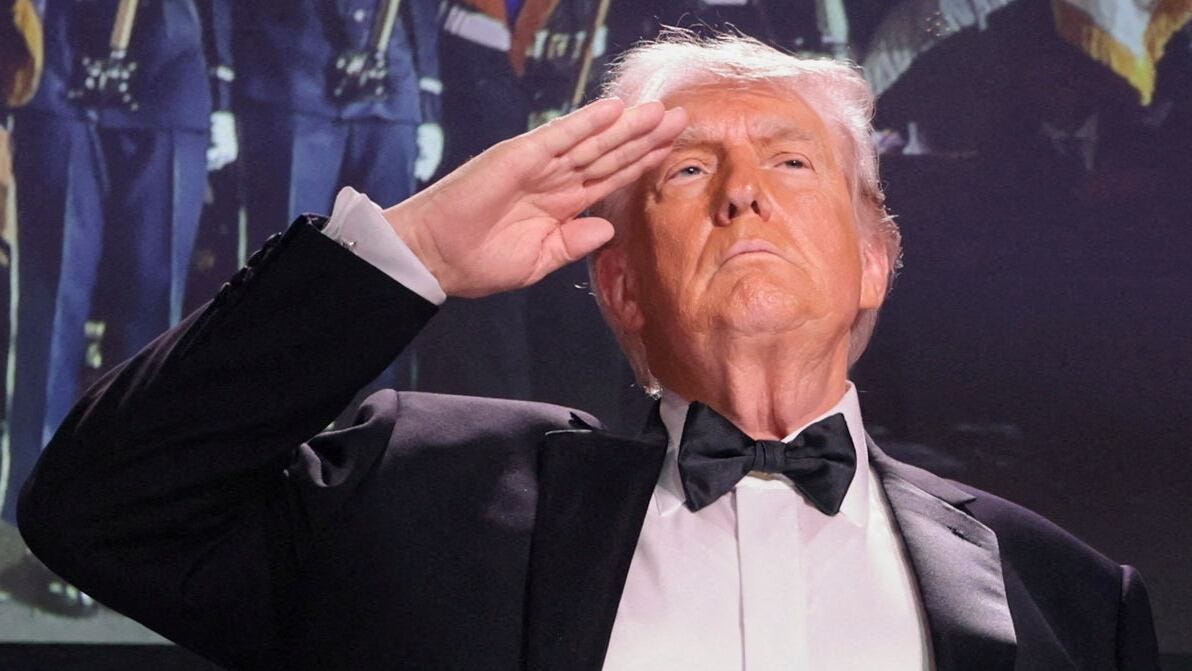
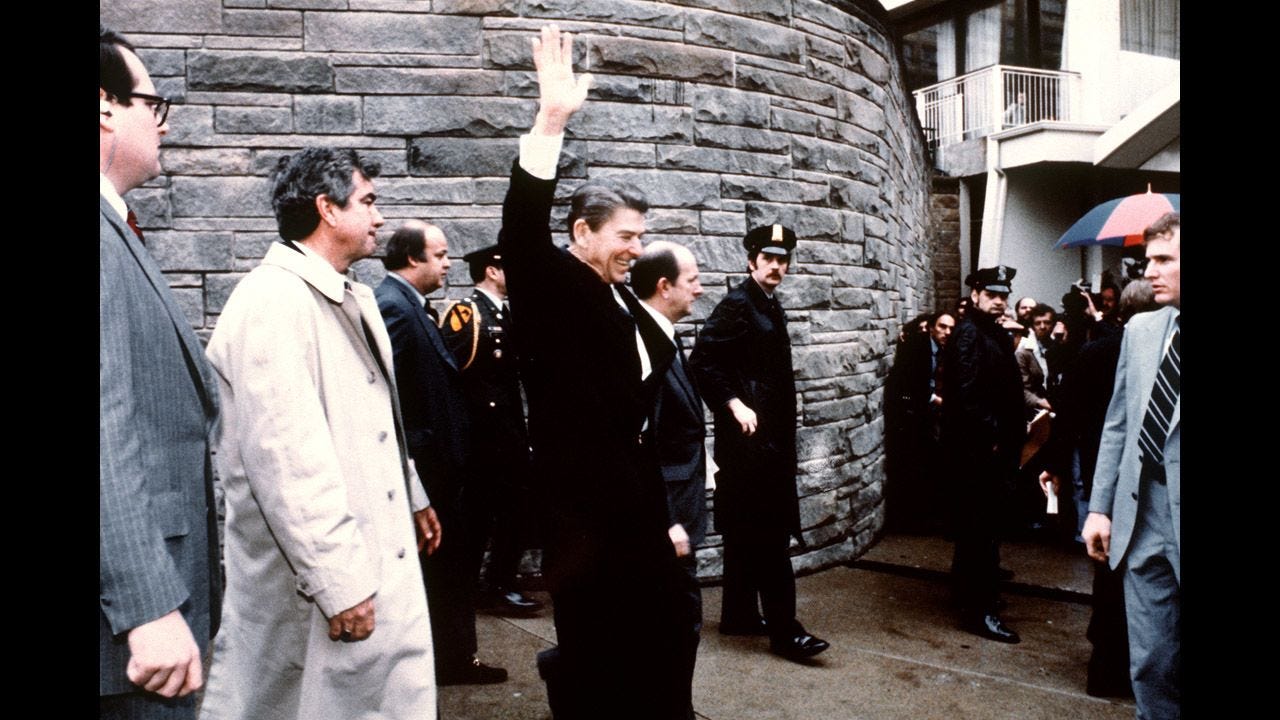
There is a melancholy symmetry to the geography of American political violence, and the Washington Hilton sits at its centre. It was outside that hotel, on the afternoon of March 30, 1981, that John Hinckley Jr. emptied a revolver at Ronald Reagan as the president walked toward his limousine and almost re-routed the Cold War. It was inside the same building, on the evening of April 25, 2026, that gunshots rang out near the main magnetometer screening area of the White House Correspondents’ Association dinner, sending hundreds of journalists, cabinet secretaries, and the President of the United States diving under tables of half-cleared salad. Forty-five years apart, the same hotel. Different president, same Republic — visibly older, visibly more tired, visibly less surprised.
That last word is the one that should detain us. The defining political fact of the night is not merely that gunfire erupted at an event attended by the President of the United States. It is that no one, watching the footage, was astonished. Butler, Pennsylvania, in July 2024. The Trump International Golf Club in Florida two months later. And now the Hilton. The three episodes are not operationally identical — Butler was a sniper attempt that drew blood, the Florida incident was an armed suspect intercepted at the perimeter of the course before he could fire, and the Hilton was a frontal charge against a magnetometer line — but cumulatively they describe an environment. American democracy has built a tolerance for the spectacle of its own near-assassinations, the way a body builds a tolerance for a poison administered in slowly increasing doses. This is not yet Weimar. It is, however, no longer normal — and the absence of national astonishment is itself the warning sign.
Why does it keep happening? The answer is not mysterious; it operates at three layers, and each compounds the next. There is the Trump-specific layer: a figure of unprecedented polarization exists inside a political environment that produces a long statistical tail of would-be lone actors, and three serious security incidents in twenty-one months are at minimum the empirical atmosphere of that environment, even before any one motive is fully established. There is the systemic layer: an information ecology that radicalizes the marginal, a firearms ecology that arms the radicalized, a political culture in which the dehumanization of opponents has migrated steadily from the fringes to the centre of both party machines. And there is the occasion-specific layer: this was Trump’s first WHCD as a sitting president, attended by virtually his entire cabinet, in a hotel whose ballroom security has historically been hardened while the surrounding public spaces — lobby, corridors, screening line — have been treated as ordinary commercial-hotel terrain. Early reporting indicates that the Hilton itself had no security checkpoint at the building entrance and that the TSA staffed only the ballroom screening, which is precisely where the suspect chose to engage. The surprise, then, is not that such a configuration attracted danger. The surprise is that American politics has grown so accustomed to imagining it.
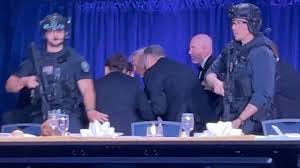
What, then, does the night reveal of American democracy? Two truths, both painful, both simultaneous. The first is that the ceremonial truce is dying. The WHCD was, in its better years, a small constitutional sacrament — the press and the President sharing bread once a year as ritual acknowledgment that, whatever the daily combat, both were bound to the same compact. That ritual is now physically dangerous. When the symbolic spaces of civic life become tactical environments, you are witnessing what Linz once called the erosion of the loyal democratic playing field, the slow drift from political opponents to existential enemies. The second truth, however, is the consoling one: the institutions held. The Secret Service extracted the protectees in seconds. The suspect, who according to the President charged a security checkpoint armed with multiple weapons, was stopped at the perimeter and never entered the ballroom. The wounded officer’s bullet-resistant vest stopped the round, and officials said he was expected to recover. The WHCA president, Weijia Jiang, initially announced with admirable institutional composure that the program would continue. In the event, it did not — law enforcement cleared the building, and the dinner will be rescheduled within thirty days. Even the aborted attempt at continuation mattered. American democracy absorbed the blow and kept functioning within the hour. Resilience tonight is not immunity tomorrow — but resilience, in 2026, is not nothing either.
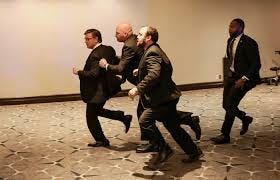
And the Secret Service? Caught off guard, again — though the verdict requires more precision than the cable-news scoreboard allows. The shooter never reached the ballroom; layered defence functioned in the narrow operational sense, and the agent who absorbed the round did exactly what protective gear is designed to enable. But the perimeter was breached far enough that shots were fired, plates were broken, and an attendee of Wolf Blitzer’s stature was, by his own account, only feet from the gunman as he opened fire. Worse, early and still-unconfirmed reports suggest the suspect may have exploited an unsecured area of the hotel before charging the magnetometer line. If that detail survives scrutiny, it will dominate the post-mortem and force the agency to confront a structural problem of its own making: it is asked to protect an expanding constellation of protectees across a shrinking number of genuinely controllable venues, with a workforce that has been chronically under-resourced for two decades and post-Butler reforms still bedding in. One weak link — a rooftop, a stairwell, an unsecured back corridor — is enough to manufacture a near-miss. And the Hilton, as Reagan’s blood once already taught us, is a building the agency knows almost too well: long familiarity has, in retrospect, produced a kind of operational complacency about everything outside the ballroom door.
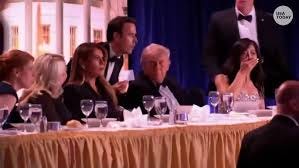
Should the dinner have continued? Trump’s instinct — to say let the show go on while obeying extraction protocol — was politically near-perfect, and not coincidentally near-Reaganesque. Cancellation hands the assailant a symbolic victory; continuation signals that the Republic does not flinch. But protectee protocol is non-negotiable, and the bifurcated outcome that emerged — Trump publicly requesting continuation, quietly complying with extraction, the WHCA initially announcing resumption before law enforcement overrode it — accomplished the symbolic work without exposing the principal. He banked the capital of defiance without paying the operational cost of staying. The WHCA, meanwhile, banked the institutional capital of a press corps that had at least intended to refuse capitulation. Everyone got something they needed, including the building itself, which was not asked to absorb a second incident.
***
But the deepest analysis of the night requires returning to Trump as a political subject, because he is the only contemporary American politician whose response to physical danger is itself a political instrument. Butler, July 13, 2024, was the proof of concept: a millimetre’s grace, a streak of blood across the cheek, a clenched fist raised before extraction, fight, fight, fight mouthed at a camera that was not yet supposed to be on him. That gesture was not coached. It was not advised. It was instinct — the rarest of political gifts, the one that cannot be taught and cannot be acquired, the capacity to know in real time what the camera demands at the second the camera is on you. Evan Vucci’s photograph, framed by the American flag, became the single most consequential political image of the 21st century to date, and effectively closed the 2024 election within seventy-two hours of being taken.
Tonight denied him that canvas. There was no fist. There was no blood. There was, by the Associated Press’s account, a brief stumble on the way out — the kind of detail that, magnified, could undo a survival mythology in a single photograph. So he did the next thing. Denied a gesture, he manufactured a phrase: LET THE SHOW GO ON, six words in capital letters, transposing defiance from the body to the keyboard. Denied a stage, he claimed the briefing room. Denied an image, he released video on Truth Social of the suspect being charged by armed officers in a hotel hallway, with a piece of rhetorical scaffolding that deserves close attention — attacking our constitution. Not attacking him. Not attacking the press. Attacking the constitutional order itself, which is the politically smartest possible noun, because no American politician can argue with it and every American is implicated in defending it.
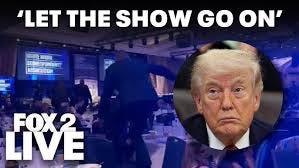
What followed at the podium has been, by any reasonable measure, the most disciplined major Trump performance in recent memory. He praised the Secret Service rather than excoriating them — a deliberate inversion of the post-Butler reflex, when his coalition’s eventual line was that the agency had failed and its director ought to resign. He humanized the response by foregrounding the wounded agent, supplying the victim-hero narrative his own untouched body could not. He invoked the partisan grievance — not the first time Republicans have been targets, recalling Palm Beach and Butler — and immediately layered over it a bipartisan reconciliation appeal, asking Republicans, Democrats, independents, conservatives, liberals and progressives alike to recommit with their hearts to resolving differences peacefully. The base hears persecution; the median voter hears statesmanship; both are produced in the same breath. He converted the operational vulnerability of the Hilton into a substantive policy pitch — a White House ballroom — a project he has wanted for years and has now found his casus belli for. He even permitted himself a self-deprecating joke: had he known the presidency was this dangerous, maybe I wouldn’t have run. And he is, at the moment of writing, taking journalist questions calmly, refusing to dismiss, refusing to combat. In the venue where the dinner was supposed to celebrate the press, the president attacked at the venue’s perimeter is now patiently answering the press’s questions. The optic is, whatever one thinks of the man, formidable.
The historical analogue is not Reagan, whose 1981 wit (Honey, I forgot to duck) belonged to a different political ecology entirely. The analogue, at the level of political mythology and not at all at the level of operational equivalence, is de Gaulle, who survived something on the order of thirty assassination attempts during his presidency, the most famous being Petit-Clamart in August 1962, when OAS gunmen sprayed his Citroën DS on the road to Villacoublay and he emerged to remark, with characteristic icy contempt, that ces gens-là tirent comme des cochons. De Gaulle then weaponized the attempt to push through the constitutional referendum on the direct election of the president, restructuring the Fifth Republic in his own favour. The parallel must be held with care — Petit-Clamart was an organized paramilitary operation by a known clandestine network, while the Hilton, on present evidence, appears to have been the act of a lone individual. But the political-theological structure is what matters: a leader who positions himself as the embodiment of the nation, whose survival of repeated existential threats becomes, over time, proof of the rightness of that embodiment. Le pays ne peut se passer de moi. Trump phrases it differently — I am your retribution, I am your warrior — but the structural claim is recognisable, and each survival quietly becomes evidence for it.
We now have, as I write, the beginning of a portrait of the assailant. Two law enforcement officials have identified him to the Associated Press as Cole Tomas Allen, 31, of Torrance, California, and the President himself, from the briefing room, characterized him as a lone wolf. Beyond the identification, no manifesto and no formally confirmed motive have been released. Already, partisan ecosystems are searching for a usable motive. Until law enforcement confirms one, the more responsible formulation is conditional: a left-coded profile would transform the politics of Trump’s restraint into something his coalition will demand he capitalize on; a right-coded profile would produce a different and uncomfortable reckoning for parts of that same coalition; an apolitical or clinically unstable profile would deflate the whole framing into the more banal and more recurrent American category of mass-shooter pathology unattached to ideology. Each of those four possibilities reshapes the political consequences differently, and we are not yet at the point where any of them can be ruled out.
The second open question is whether a defining image emerges. In contemporary politics, what cannot be photographed only half-happened, and Butler worked partly because of one frame. Without a comparable image from tonight, the incident risks becoming what every near-miss after the first tends to become: not a milestone, but a statistic.
And here, finally, is the genuinely uncomfortable closing observation. The mythology of survival is, by its arithmetic, a wasting asset. Each successive attempt slightly devalues the iconographic power of the one before. If the next attempt — and the one after that — are folded into the same narrative, the magic thins. There is a strategic temptation, baked into every regime that produces a survivor-leader, to channel the surplus political energy outward — to convert survival into licence for action against named enemies. Trump did not yield to that temptation tonight. He named no one. He blamed no institution. He defended free speech and called for unity. The discipline was real. The question for the next forty-eight hours, and for the four years beyond, is whether it holds — or whether someone in his orbit, or he himself in the small hours on Truth Social, decides that the iconographic deficit of tonight needs to be made up in some other currency.
The Hilton has now spoken twice on the subject of the American presidency: in 1981, that the office can absorb a near-fatal shock and recover; in 2026, that the absorption is becoming routine. The first lesson was about resilience. The second is about repetition. They are not the same lesson, and the second is the more disquieting one.